| <prev< Understanding Morandi - The Post-Stressed Conrete Cable Stays |
| >next> Album year 2007, including historic postcards |
 | Foto Documentation August 2015
|
Photo documentation: August 14, 2018 *Update*
- I have added several additional images taken on August 8, 2015,
in addition to the 2007 photographs further down this page.
- Information for media use:
The images below (800 × 600 px) may be used freely,
provided that the author, "Kristian Hasenjäger", is credited
and the watermark "www.retrofutur.org" remains visible.
- I have documented and researched the history of this bridge since 2007.
- For any inquiries, please feel free to email "skyhook@aon.at"
- For high-quality, high-resolution images and video clips, please contact "skyhook@aon.at".
- Click on the gray square icon (next to the orange title immediately above) to view all images on a single page.
Structural peculiarities of the Polcevera Bridge - brief overview:
- A distinctive feature of this bridge (opened in 1967) is the configuration of the three 90 m high A-frame pylons, one of which collapsed on August 14, 2018.
- Each of the three A-frame pylons carries a statically fixed deck segment by means of four cable stays.
- A set of steel stay cables is routed inside the visible concrete stay beams. The cables were prestressed during construction, so that the surrounding concrete stay beam remained under permanent longitudinal compression. This configuration was intended to be less susceptible to oscillations than a configuration with exposed steel stay cables, and to reduce stress in the cables. However, because of their own weight, length and slender cross-section, the stay beams behave more like flexible catenaries than rigid beams.
- Since the 1980s, the bridge has been continuously and thoroughly monitored.
- Preliminary inspections had revealed a concerning situation, manifested by the presence of voids and deterioration in the concrete, especially in the anchorage zones of the prestressed stay cables.
- In particular, the section passing over the highly urbanized area was strengthened from 1993 onward (see dedicated photos below).
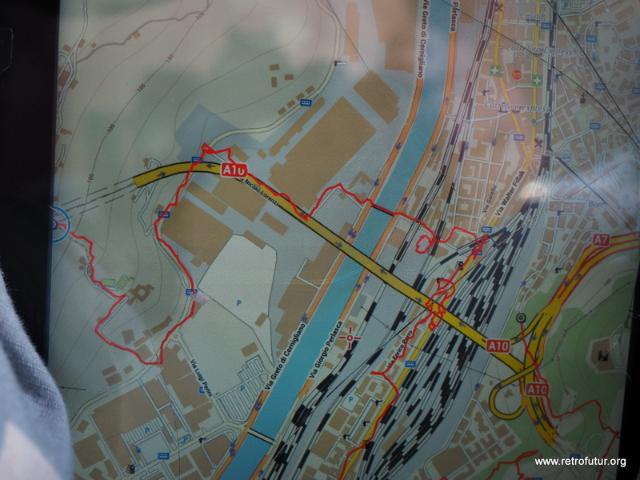
GPS track of the following fotodocumentaion of Morandi Bridge Genova on August 8, 2015
|
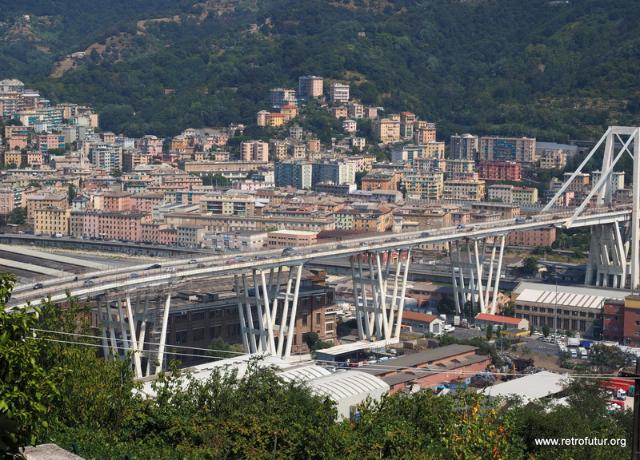
Overview: The Bridge spans over a highly urbanized suburb of Genova at a height of 45m. The leftmost of the three 90m high pylons (numbered 9, 10 and 11) collapsed on August 14, 2018.
|
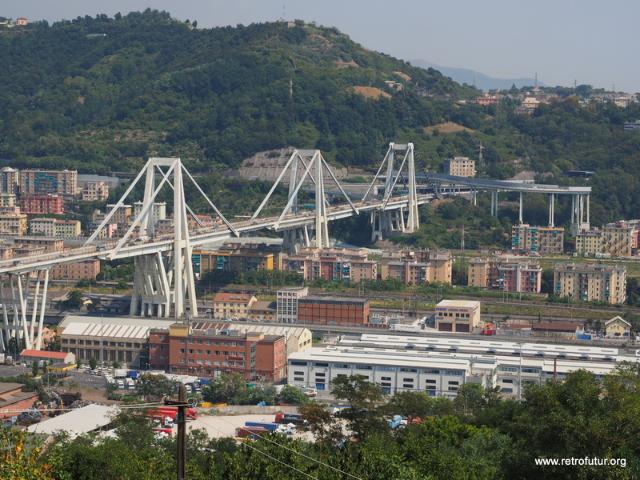
The first A-type pylon (11) on the eastern side of the Polcevera valley on August 8, 2015
|
Easter approach viaduct and A-type pylon number 9 which failed on August 14, 2018
|
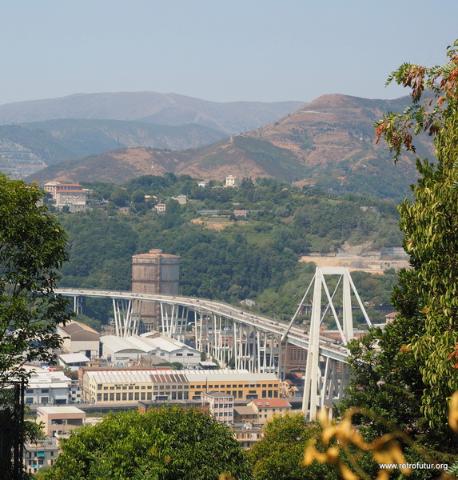
On August 14, 2018 the left tower 9 collapsed, while the right pylon 10 remained intact and saved the houses below it
|
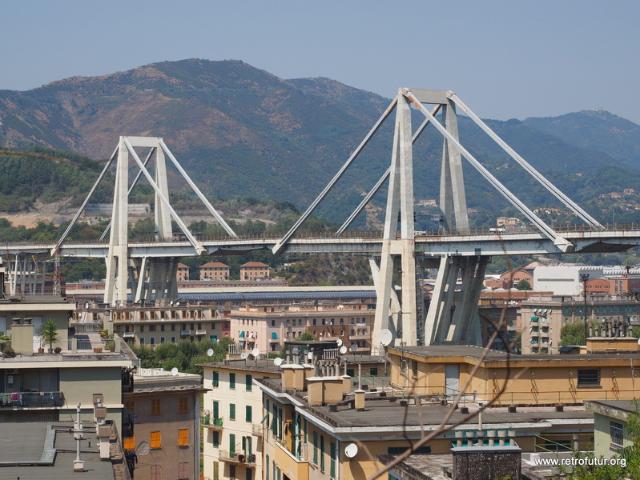
The particularity of the longer span tables is their static balance on "A"-shaped pylons and the extension tables in-between them held by thin prestressed concrete girders attached to 90m high towers
Morandi Polcevera bridge in Genova Italy
|
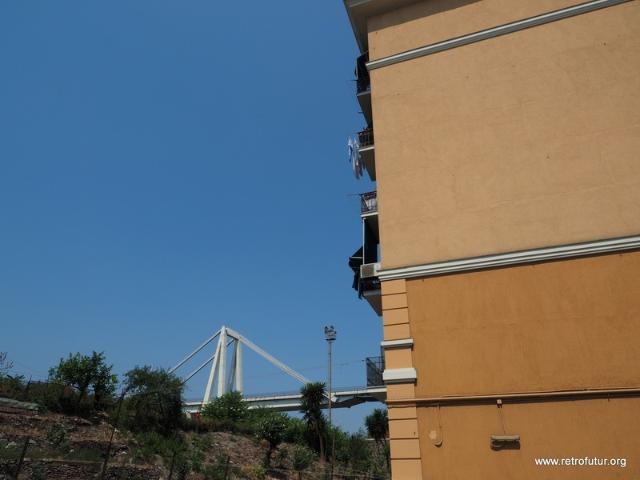
The Morandi Polcevera bridge crosses highly populated suburbs of Genova
|
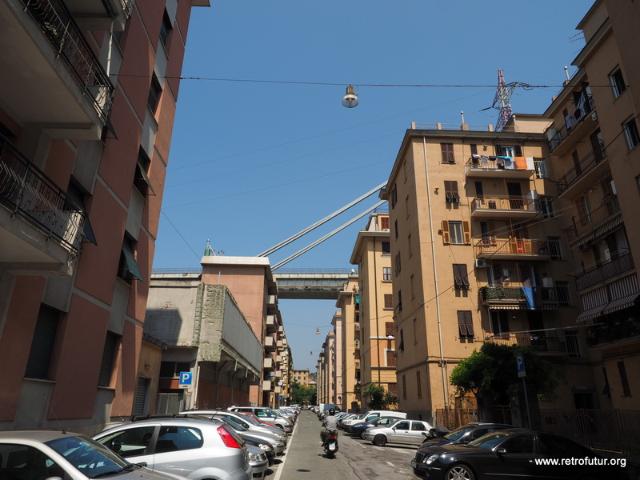
The four cable stays of the eastern pylon have been visibly reinforced in the past decades, after 1993. A set of external cables form a sheathing to strengthen the original cable stay
|
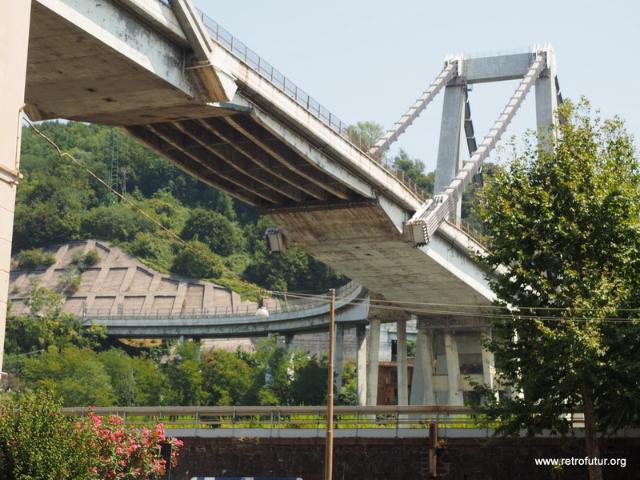
The Bridge spans over a highly urbanized suburb of Genova at a height of 45m. This section was not affected by the collapse.
|
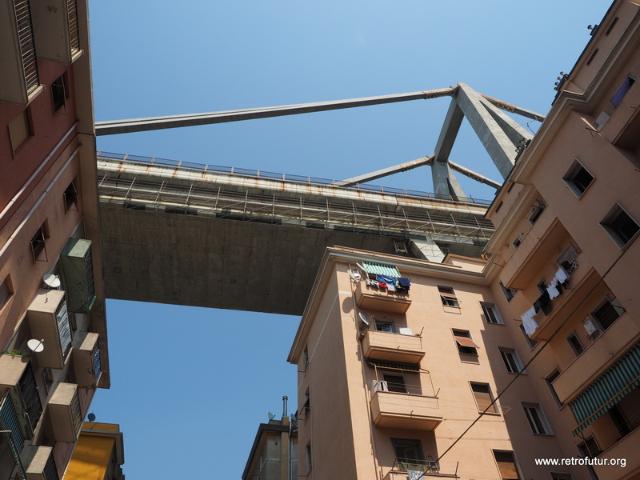
The Bridge spans over a highly urbanized suburb of Genova at a height of 45m. This section (between pylons 10 and 11) was not affected by the August 2018 collapse.
|
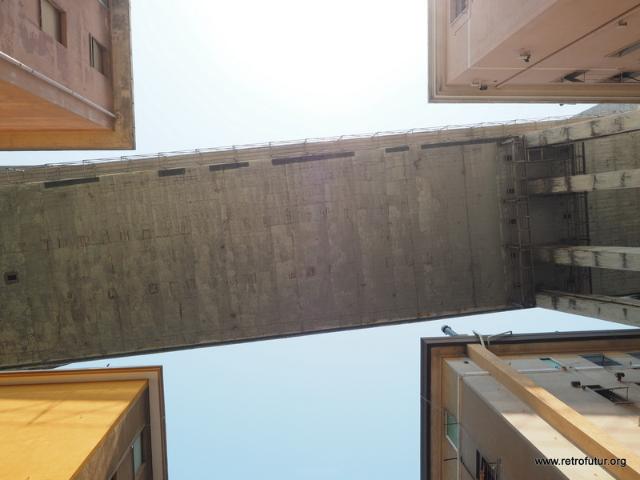
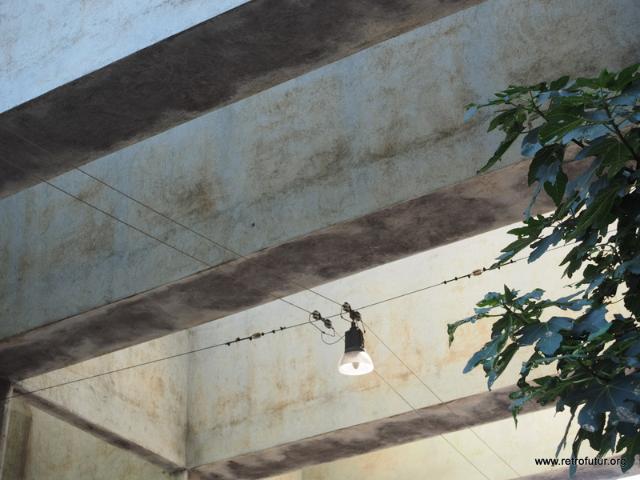
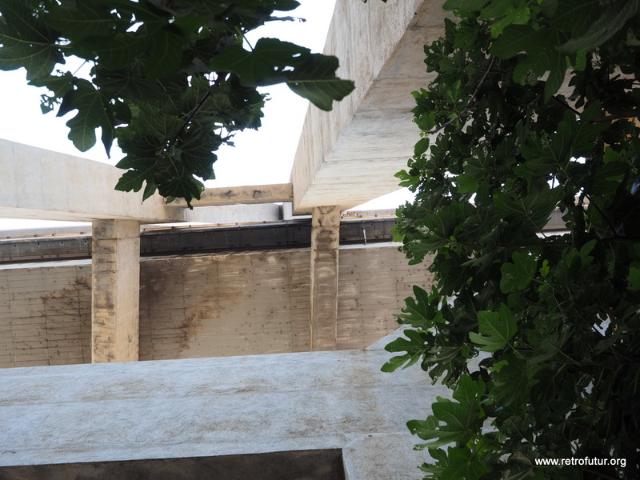
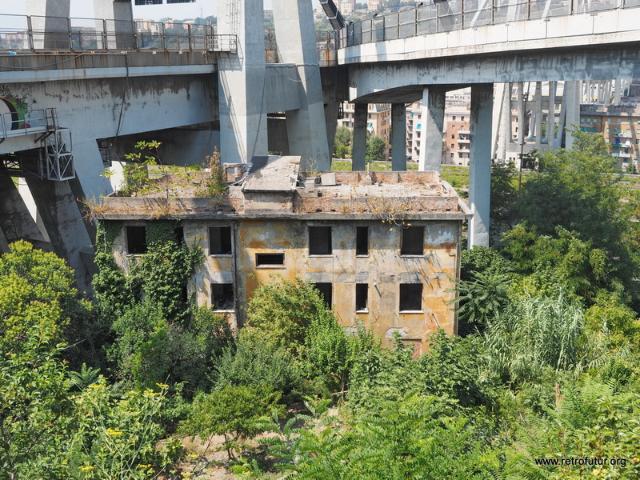
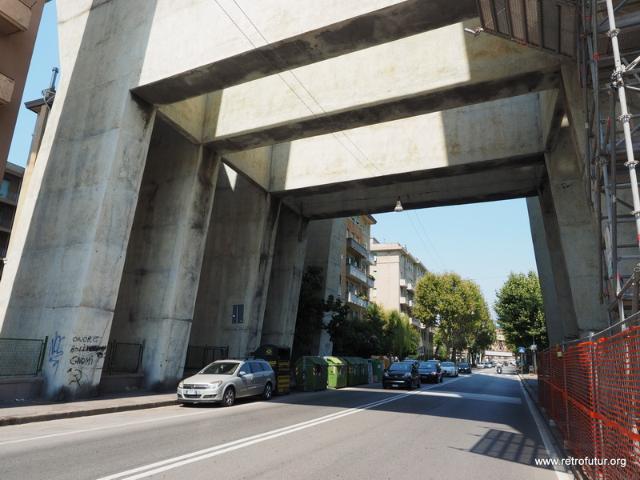
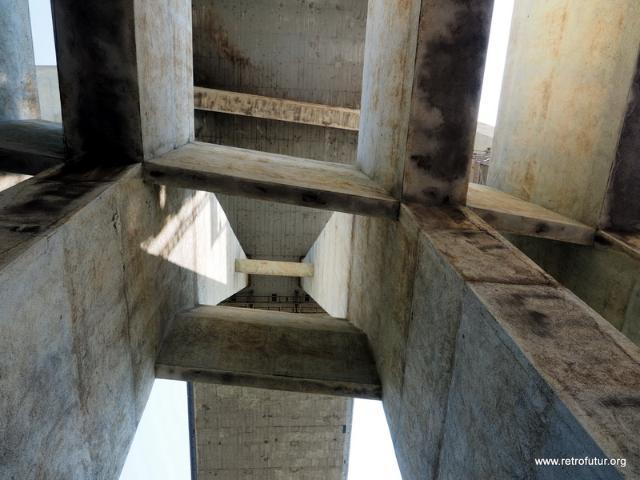
The Morandi Polcevera bridges passes right through the homes. This part however did not collapse on August 14, 2018
|
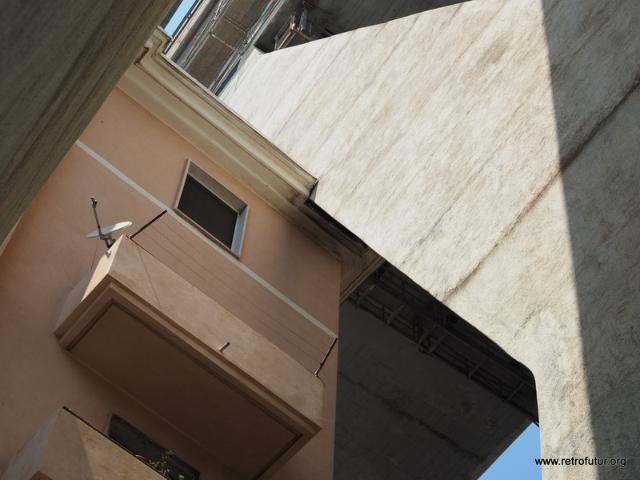
The Morandi Polcevera passes right through the homes. Pylon number 10 did not collapse on August 14, 2018
|
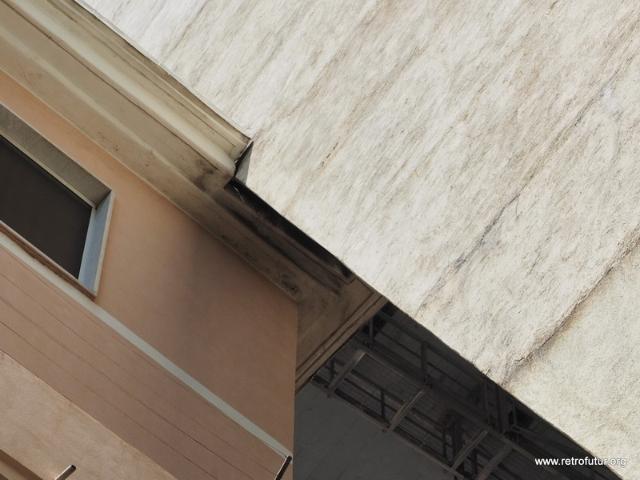
The Morandi Polcevera passes right through the homes. Pylon number 10 did not collapse on August 14, 2018
|
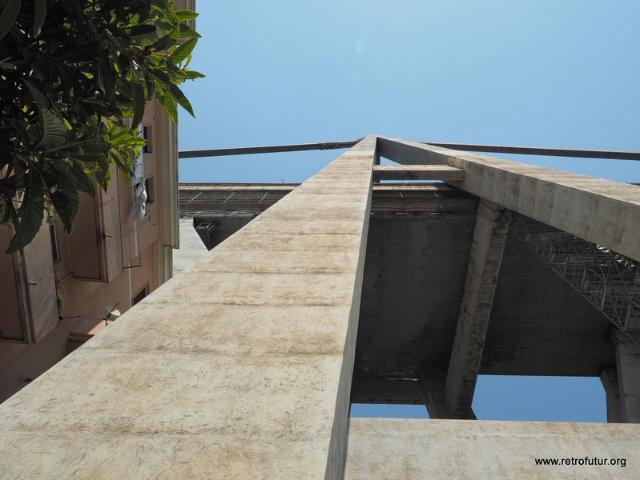
The Morandi Polcevera passes right through the homes. This part however did not collapse on August 14, 2018
|
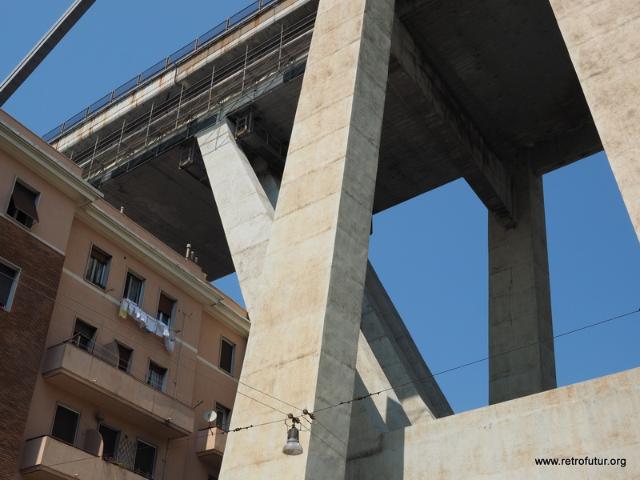
The Morandi Polcevera passes right through the homes. Pylon 10 however did not collapse on August 14, 2018
|
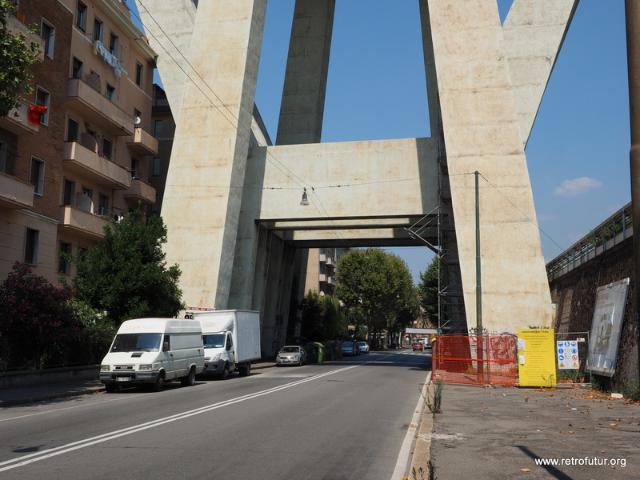
Reinforced pylon number 10. The visible steel sheathing has been added 1993 and later. This is the middle of the three 90m high pylons
|
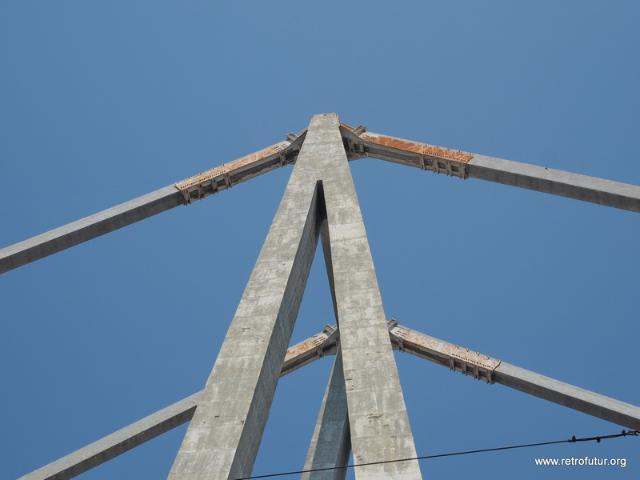
Detail view of reinforced pylon number 10. The steel sheathing has been added 1993 and later. Pylon 9 did not receive this upgrade.
|
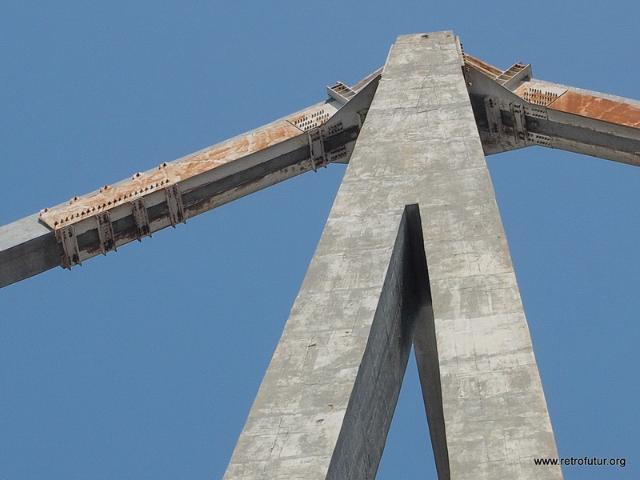
Pylon number 10
|
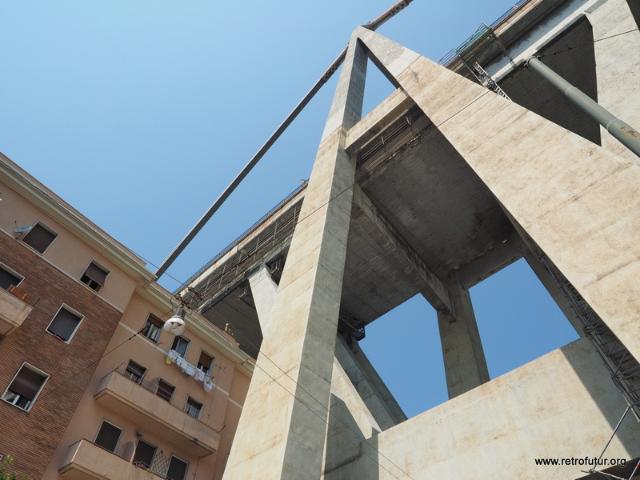
Pylon number 10
|
The section of Morandi Polcevera bridge collapsed on August 14, 2018. The tower number 9 on the right disintegrated, while number 10 one on the left luckily still stands. Here it crosses a disused railway yard.
|
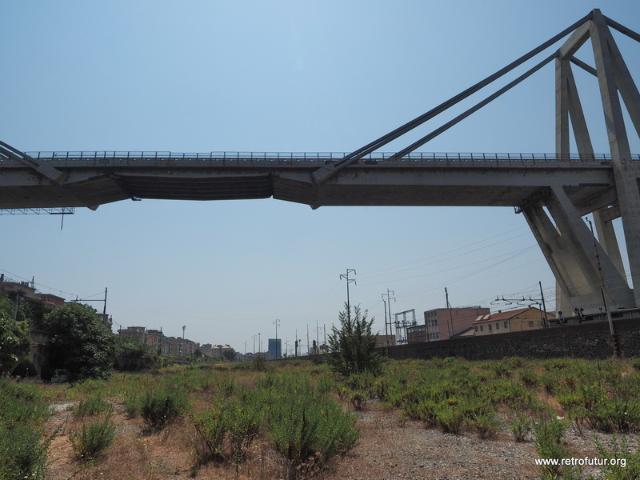
The section of Morandi Polcevera bridge which collapsed on August 14, 2018. Here it crosses a disused railway yard, but also the residential buildings on the left. The left tower (number 10) did not collapse, hence probably saving many lives in the build
|
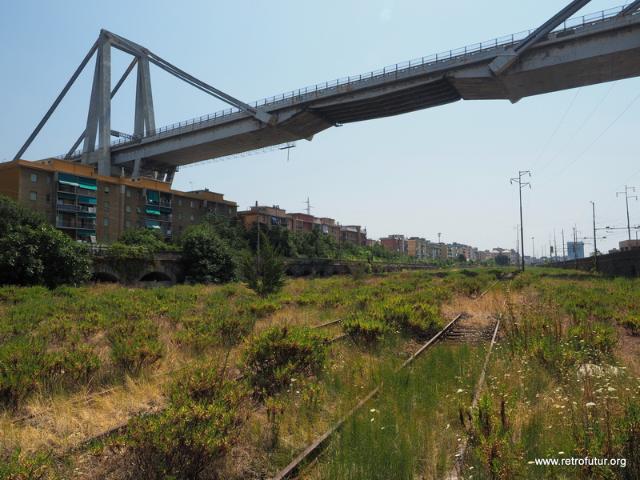
The section of Morandi Polcevera bridge which collapsed on August 14, 2018. Here it crosses a disused railway yard, but also the residential buildings on the left.
August 2015
|
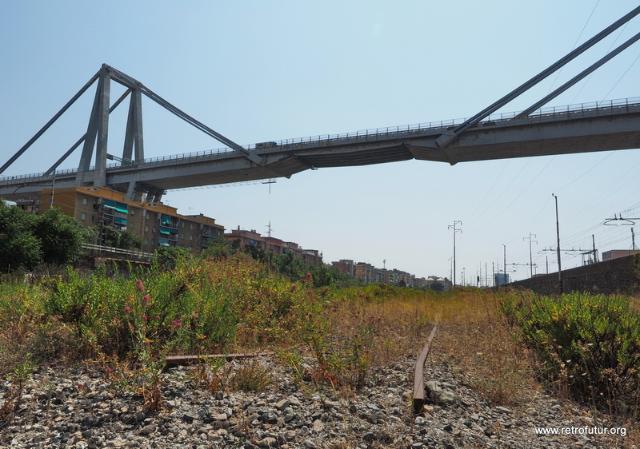
Western approach viaduct of Morandi bridge, still in place today
|
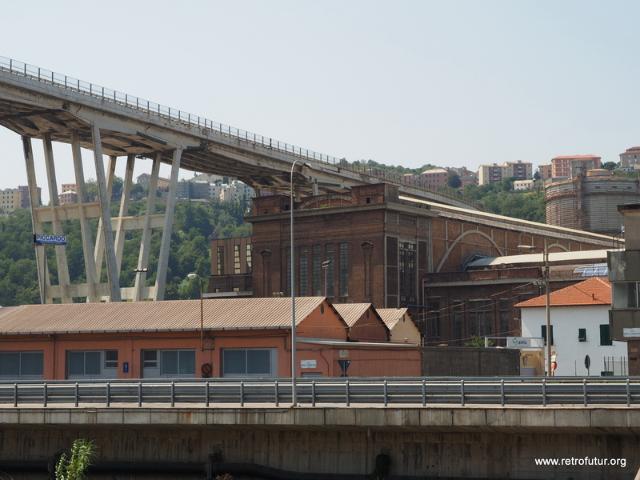
Photo taken from foot bridge over Polcevera river. All three A-Type pylons, numbered 9,10 and 11 from right to left are visible.
|
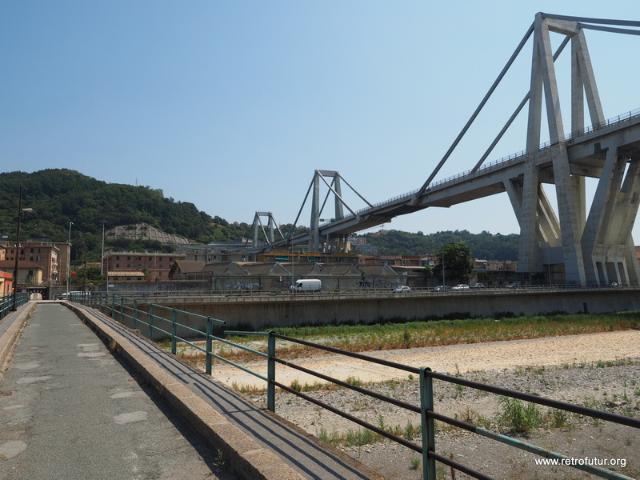
Polcevera river and Morandi Bridge. All three A-Type pylons, numbered 9,10 and 11 from right to left are visible. August 2015
|
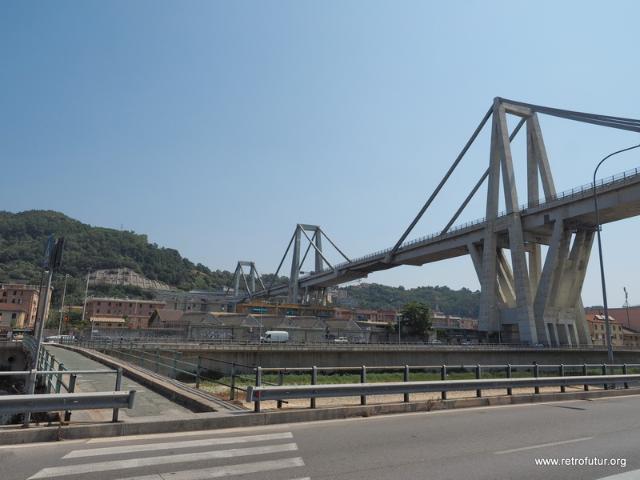
Western approach bridges spanning over Ansaldo yards in August 2015
|
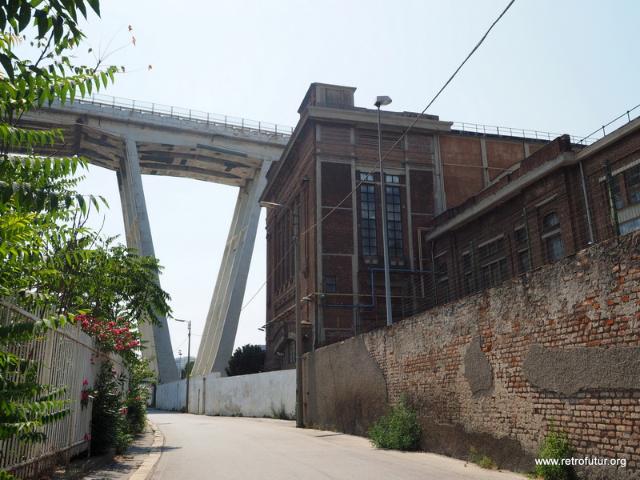
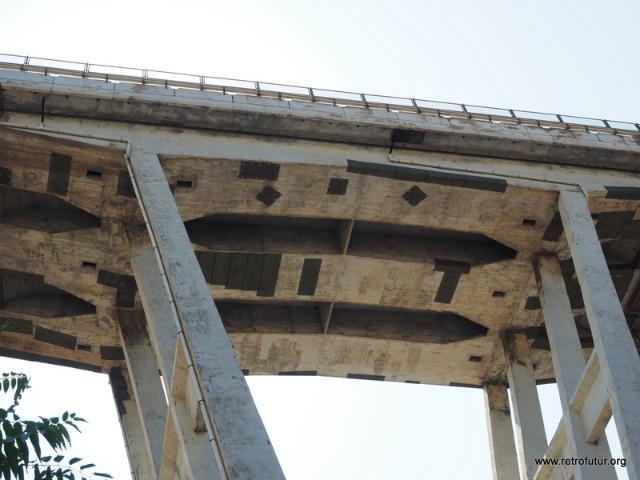
Pylons number 8 and 9 (from right to left) of Polcevera bridge in August 2015
|
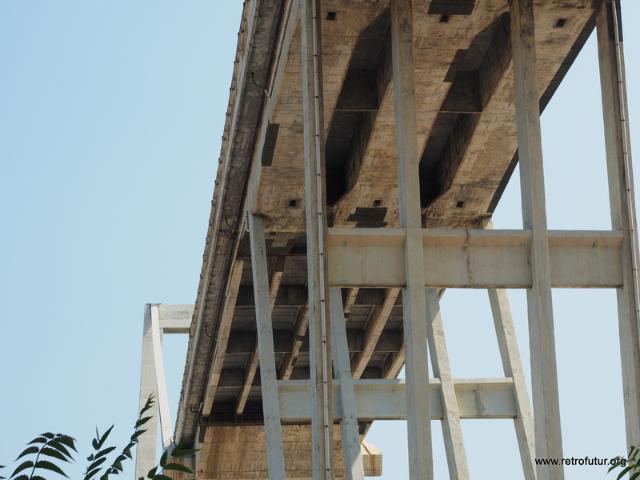
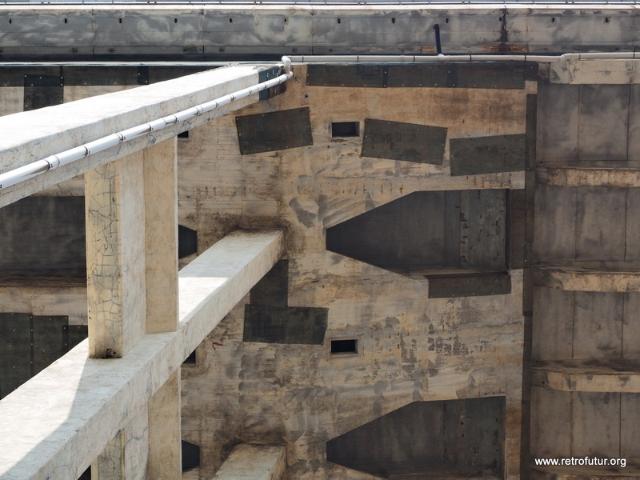
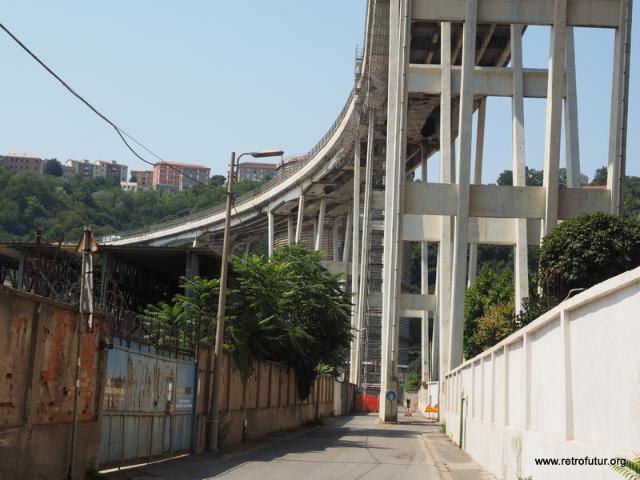
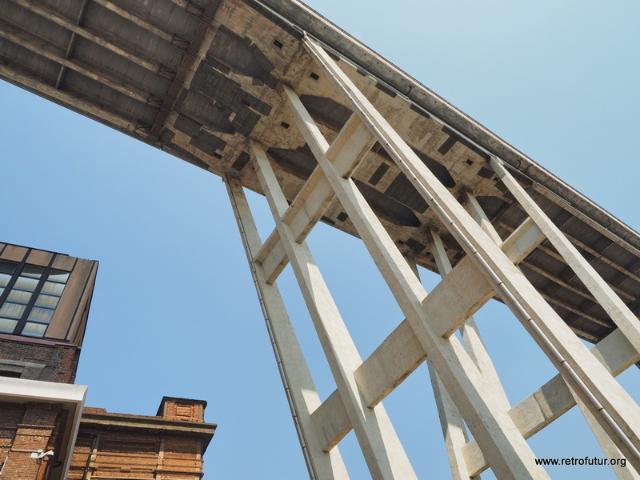
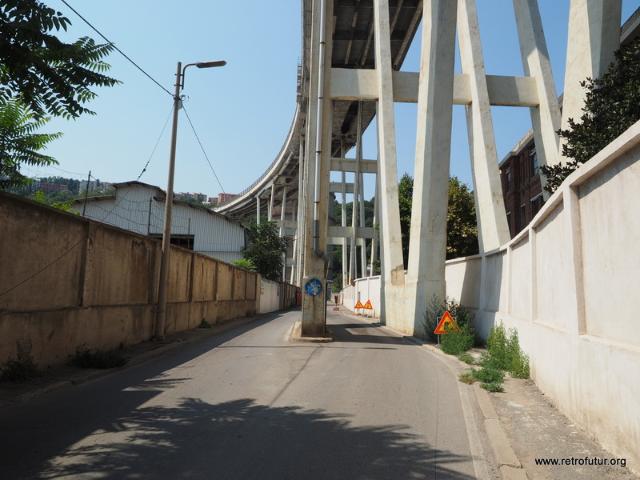
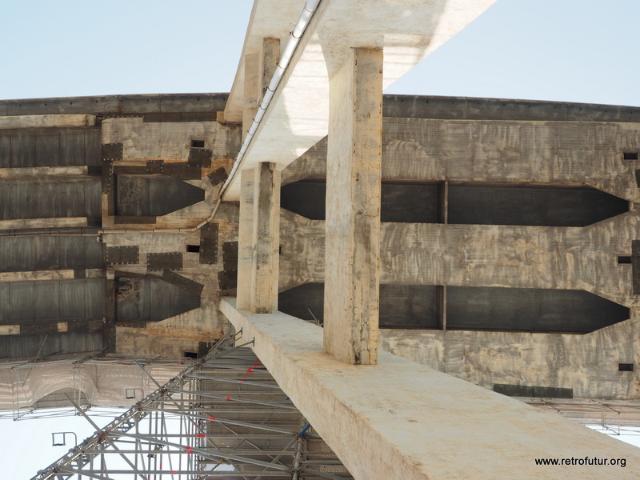
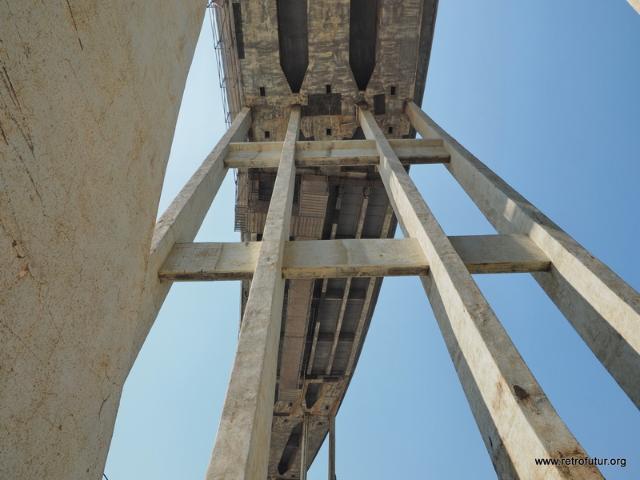
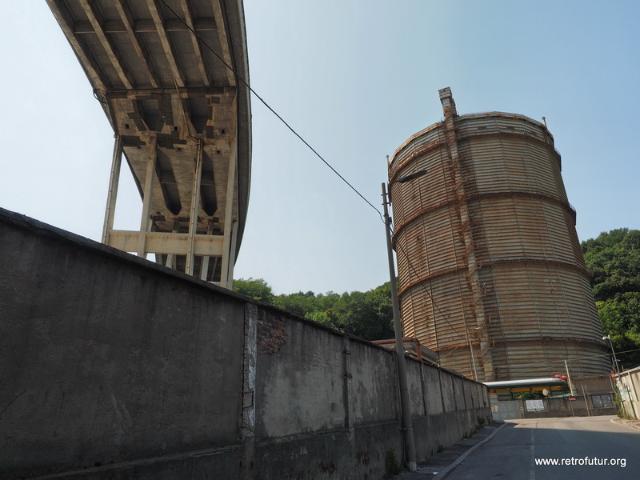
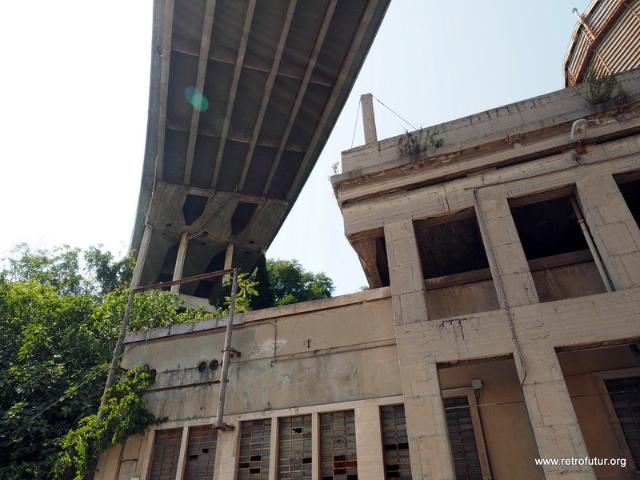
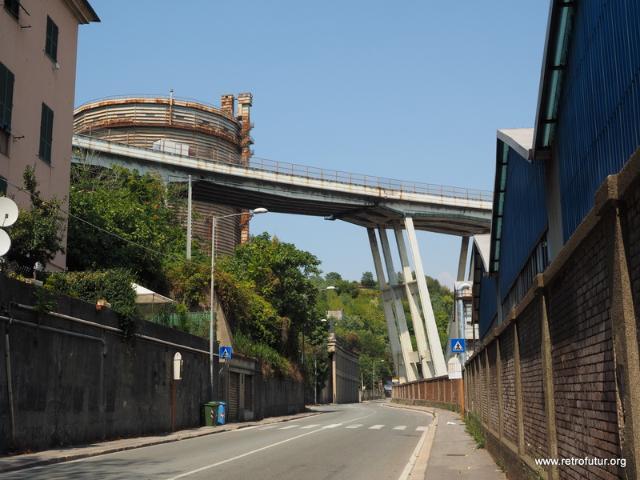
The leftmost (9) of the three A-type pylon collapsed on August 14, 2018. By miracle the other two (10,11) remained in place which is likely to have saved many lives in the buildings and roads underneath
|
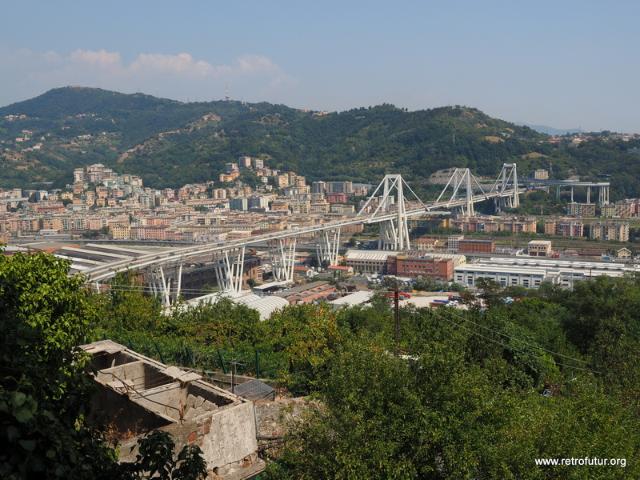
View from west towards east.
Pylons 5 to 8 of western approach viaduct, followed by the high A-type pylon 9 on August 8, 2015
|